All English Content
How A National Media Braved British Suppression To Mobilise Masses To Play A Role In India’s Freedom
To understand the power of the media in India during British rule, the reader needs to appreciate the sheer grit of those who wrote for these newspapers, magazines and journals and how such journalistic writings threatened the almighty imperial government. One has only to recall the imprisonment that both Bal Gangadhar Tilak and Mahatma Gandhi had to undergo as examples of courage of opinion and repression.
Today, large parts of northern and western India will observe Haryali Teej (Green Tritiya) which is the third day of the bright half of the mount of Shraavana.
This mid-monsoon festival that celebrates green, the symbol of fertility and regeneration, is called by different names. It is Singhara Teej in Rajasthan, Teeyan in Punjab and also as Sawan Teej, Choti Teej or Madhusrava Teej by others.
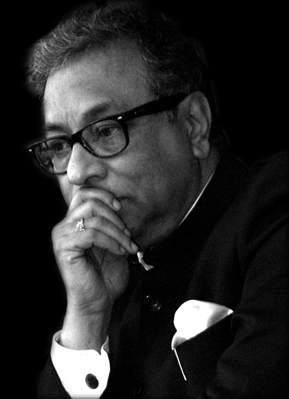
As I pen my sincere tribute to one the departed giants of modern Indian history, Prof Sumit Sarkar, I am overwhelmed with several feelings, many personal. I have intertwined my understanding of Sumit Sarkar with various phases of my life and the contexts in with he blossomed before me.
Very few urban Bengalis know that many parts of rural Bengal, including those around Kolkata, celebrate today as the first day of the holy month of Shravan and also for Bipadtarini Ma's fast and puja. She is one of 108 incarnations of Durga and is noted for her special capacity to remove dangers and hurdles in life.
Most people think that Ulta Rath Yatra, also known as Bahuda Yatra, which takes place for this year today, Friday, 24th July 24 marks the end of Ratha festival.
No — this sacred event of the return journey of Lord Jagannath, Lord Balabhadra, and Devi Subhadra from the Gundicha Temple, back to their main shrine is only the start of a four day long grand ceremony. The 4 day grand festivities and processions for 2026 conclude with these final key dates:
July 24 (Ulta Rath / Bahuda Yatra): when the deities return to the main temple.
July 25 (Suna Besha), when the deities are adorned in their magnificent golden avatars.
July 26 (Adhara Pana): when a special sweet drink offering is made to the deities.
July 27 (Niladri Bije) marks the final return of the deities into the sanctum sanctorum.
Today, thousands of devotees pull the three chariots back along the Grand Road (Bada Danda) in Puri while chanting “Jai Jagannath.” This Bahuda Pahandi marks the ceremonial bringing out of the deities from the Gundicha Temple and placing on their chariots. Chhera Pahanra follows, when the Gajapati Maharaja of Puri symbolically sweeps the chariots with a golden broom, emphasizing humility before the Lord.
Mausi Maa Temple halt: On the return journey, the chariots stop at the white Mausi Maa Temple, where Lord Jagannath is offered Poda Pitha, a traditional baked rice cake that is believed to be one of his favourite offerings.
The day after the chariots reach the main temple, the Suna Besha (Golden Attire) takes place and the deities are adorned with magnificent gold ornaments while seated on their chariots. This is one of the most spectacular events of the festival and attracts enormous crowds.
Adhara Pana is a sweet herbal drink offered to the deities in large earthen pots, on the third day and these pots are then ceremonially broken.
Niladri Bije is the grand ceremony of the deities finally re-entering the Jagannath Temple on the fourth day.
A playful ritual depicts Goddess Lakshmi initially refusing Lord Jagannath entry until he appeases her with offerings, symbolizing reconciliation.
In West Bengal, Ulto Rath is celebrated with equal enthusiasm. The most famous celebrations are at Mahesh (Serampore, Hooghly), where the historic chariot is pulled back amid fairs, devotional music, kirtan, cultural performances, and large gatherings of devotees.
Thousands of other local Jagannath temples across Bengal also organize return processions, bhajans, distribution of prasada, and community festivals — but all accept that Puri is surely the highest and the grandest.
To understand the decline of Bengal over the past five or six decades, one has to recall what dizzying heights it had once reached. Though it was always one of the richest provinces during the Sultanate and Mughal eras, which attracted the European traders to its shores, it was the British who chose to make it the 'bridgehead' for their Indian acquisitions.
The numbers game in Delhi is different from that in Bengal. Prime Minister Narendra Modi does not have a majority on his own in the Lok Sabha and his government depends on the support of smaller National Democratic Alliance parties. Modi has managed to obtain outside support in 28 seats from the Telugu Desam Party under Chandrababu Naidu and the Janata Dal (United) under Nitish Kumar. Sadly, despite splitting the Aam Aadmi Party recently, its three Lok Sabha members have remained with their parent party.
I have a request for my former colleagues in Trinamool Congress whose conscience has suddenly woken up only after the party’s crushing defeat in West Bengal.
In 2024, 29 Lok Sabha MPs won their seats on TMC tickets (well done!) and after one death, there were 28 in the TMC till a week ago.
Eighty MLAs were also victorious in May 2026, despite a strong anti-TMC wave. Voters sent them to raise questions against the Bharatiya Janata Party – just as, as Leader of the Opposition in the state assembly, Suvendu Adhikari used to expose issues, one after another, so consistently and so vigorously, against the state government of the Trinamool Congress.
My appeal to those who were elected on TMC’s symbol and now wish to join the BJP (or support it from outside) is to first get their voters’ approval. Let them resign and come back joyfully after winning. They may surely be thick with the BJP now, but will those who spent their entire lives fighting communalism find it easy to do such somersaults with their ideals? And will the Muslim MPs be accepted by the BJP? We also hope the pirouetting dancers are be able to convince their electorate about their new-found passion with saffron. The best way to reconcile these contradictions is by contesting again and returning with pride after being re-elected.
Only then would the people’s mandate, which is the pillar of democracy, be upheld with honour.
This way, they could leave the corrupt TMC with dignity, and the silence the many critics who are alleging underhand deals and huge sums of money.
The new BJP government in Bengal has pledged never to compromise with corruption, especially with the TMC, so one has to wonder what on earth is this new development? The BJP has already enough seats, 207, in the West Bengal legislative assembly. The party’s president has made it clear that defectors or ‘rebel’ legislators will not find a place within the BJP.
Their doors are shut – as one prominent major TMC defector like Suvendu Adhikari is more than enough for the original loyalists to handle. After all, he was bold enough to take a bribe openly and Prime Minister Narendra Modi’s party publicised the video of the sting operation again and again – till he joined the BJP and became its battering ram in Bengal. Adhikari thus has the dubious distinction of being the only chief minister to be thus caught red-handed and then elected on the wave of public anger against corruption.
Despite this ‘No Entry’ sign, one hears that the determined lot of TMC ‘rebels’ are suddenly so wild with anger at Mamata Banerjee’s nephew Abhishek Banerjee, that they are quite content to stay put in the BJP’s portico. Surely, they must be terrified about legal action being taken against them or their supporters for many sins of commissions and omissions. If former chief minister Mamata Banerjee’s house could be raided in a month after losing power and her successor get a search and harass party of policemen at 3 am, who is left?
A few popularly elected politicians are still honest but their supporters and machinery reek of corruption. Others are boldly corrupt, to the point that one is known as Mr Square Feet because he has charged every builder in terms of how much money he could extract per square feet of built-up properties sold.
The BJP has published details of 17 real estate properties allegedly owned by Abhishek Banerjee. His links to these have been denied, of course, but no legal action has been taken to retract this claim.
Money is being discovered everywhere – even in bundles eaten by white ants in a college union room under the TMC’s control. There is, therefore, enough reason to be concerned about retribution from the new government and perhaps, hence, this indecent haste.
But will the resultant amnesty mean that legislators and elected municipal councillors who are neck-deep in corruption will continue, for instance, to go on constructing more illegal buildings and endangering the lives of local residents?
Was the sudden spurt of bulldozer action against a TMC MLA’s illegal construction a few days after the new chief minister was sworn in just a show?
It’s just a little more than month after the elections are over and the indelible ink mark on the forefinger on our left hand has not yet worn out – but is the posturing of a righteous war against corruption about to be shelved because the lion’s share of the ‘corrupt’ are switching to the government side?
We were all shocked and deeply saddened when on May 15, the honourable Chief Justice of India, Justice Surya Kant, remarked during a court hearing: “There are already some parasites who attack the system and you also want to join them. There are some youngsters who are like cockroaches, who are unemployed… some go to the media, some to social media, some become right to information (RTI) activists and then they start attacking everyone.”
Many in West Bengal are still pinching themselves from the 4th of last month to believe that they are actually in a Bharatiya Janata Party ruled state – something that was unthinkable until it really happened. Everyone could realise that the record turnout of almost 92.47% of voters meant that Bengal was angry and was sure to vote unambiguously in any one direction. Some incorrigible optimists (mea culpa) believed that the angst was directed at the unabashed alliance between the Election Commission and the BJP, with the indulgence of a Supreme Court.
- 24 great Chief Election Commissioners or CECs like Sukumar Sen and TN Seshan did not require SIR to spread terror among the citizenry and normal electoral revision worked so well for 75 years.
West Bengal is now a state governed by the Bharatiya Janata Party — unbelievable as it may appear. With the change comes a new wave of hope as well as uncertainty and trepidation. Many really believe that Bengal may now, at long last, witness some development. Bengal's half a century long drought where industry, investment and employment are concerned may finally see some relief. Our young men and women may perhaps escape the grip of chronic unemployment, at long last.
Fortress West Bengal has finally crumbled before the Bharatiya Janata Party (BJP). It was one of the last hopes of liberals, and Mamata Banerjee and her Trinamool Congress (TMC) had managed to ward off the juggernaut for well over a decade with unusual grit.
Now that ‘the hurly burly is done and the battle lost and won’, let us try to understand why and how Fort Bengal collapsed before the Bharatiya Janata Party. There is unconcealed jubilation among a large swathe of the people — from the richer merchants to the solidly Bengali bhadralok, down (surprisingly) even to those who benefited most from Mamata Banerjee's doles. Such excitement, political bitterness and the desperate urge to change were last seen in Bengal in 1977 in the election after the Emergency; as a junior Assistant Returning Officer, one had a trying time to ensure counting without boisterousness.
We are just hours away from the anxiously awaited results of the most keenly watched state election in India in the recent past – that of West Bengal. But this is not one of many intelligent and compelling guesstimates to keep hyper-excited political participants and their near-insane followers pass these tense moments. This piece is more of a record of the processes followed to ensure the disenfranchisement of millions of voters – unprecedented in the annals of India’s electoral history.
West Bengal’s election is not going to be a normal one—institutions have become part of the contest. So, voters are not just choosing a government, they are thinking about their own safety.
While many Indians still hold the Supreme Court to be a fair institution — standing amidst the ruins of many collapsed constitutional bodies — the present Election Commission of India (ECI) is considered to have reached an unimaginable nadir.
Though Mamata Banerjee has issued a high alert to make sure communal troubles do not break out in a tense and highly polarised state in election mode, it is well known that several electoral participants do not hide their community-centric wrath. Communal violence benefits those who live off religious hatred as the consequential polarisation provokes even normally secular people to rage, moving them towards hardliners. And this festival of Ram Navami has a long, provocative and bloodstained history in many parts of India – going back to the riots of Jamshedpur and Rourkela in 1964, when some 2000 people died.
After the recent elections in Bangladesh, it is good to see India reconsidering the stand it had taken during Muhammad Yunus’s rule. We may now be on the way to regaining our only steadfast friend in the neighbourhood, as the Indian establishment has swung out of its fixation with Hasina and accepted the Bangladesh Nationalist Party (BNP) as India’s best bet. It took more than a year for our government to view the BNP with more kindness despite the party’s anti-India track record.
The public ecstasy at India swinging two big trade deals, the India-UK FTA and the recent deal with the European Union (EU), reveals more skills at event management than in ensuring immediate economic survival after US President Donald Trump’s tariff terror. Even as we hope, privately or otherwise, that we have survived Genghis Khan’s devastation of our dear, comfortable world of free and open trade, we really need to get real.
Do you know that the Indian Art Market will expand to $1.1 billion by 2030 -- ₹10,000 CRORE ?
We are competing with the best in the world and the fantastic output of modern India art is being seen with new respect, internationally.
Did you know that a 1971 painting by VS Gaitonde headlined a record-breaking recent Saffronart auction in Delhi, by selling for $7.57 million, an incredible 68 crore rupees? It is the highest-ever total for South Asian art and another work of Amrita Sher Gill went for ₹66 crore, an almost same value.